How to Remove Pet Stains from Carpet: A Complete Homeowner Guide
Sharing your home with dogs or cats brings companionship, energy, and warmth to daily living, but pet accidents can quickly compromise the appearance and cleanliness of your flooring. Whether dealing with a new puppy in training or an aging cat, liquid accidents can seep deep into textile fibers, creating unsightly rings, fiber discoloration, and lingering odors.
Mastering how to remove pet stains from carpet requires understanding fiber characteristics, avoiding destructive cleaning habits, and deploying the right chemical treatments to restore your floor covering.
Many homeowners react instinctively to an accident by grabbing harsh household detergents, scrubbing vigorously, or saturating the area with hot tap water. Unfortunately, these well-intentioned reactions often worsen the situation by spreading stains across surrounding fibers or permanently setting dyes into synthetic and wool piles. By approaching the removal process with proven cleaning science and methodical blotting techniques, you can safely pull pigments from your carpet pile and protect your long-term flooring investment.

Understanding Carpet Fiber Chemistry and Pet Deposits
To eliminate difficult animal stains, it helps to understand how biological waste interacts with different carpet constructions. Most modern residential homes feature carpets woven from nylon, polyester, triexta, or natural wool.
The Role of Urochrome and Bilirubin
Pet urine contains urochrome, a biochemical pigment that gives waste its distinct yellowish hue. When liquid urine is first deposited, it is slightly acidic (typically measuring between pH 5.0 and 6.0). In this fresh, warm state, the liquid easily penetrates factory-applied fluorochemical stain shields.
If the liquid remains unaddressed, bacteria immediately begin breaking down the urea into volatile ammonia. This chemical reaction creates a sharp spike in alkalinity, often pushing the pH above 8.5.
This alkaline shift acts much like a textile bleach or dye-stripping agent. Over several days, it can alter the chemical bond of the carpet yarn itself, leading to permanent yellow, orange, or light brown discoloration that persists even after the physical substance is cleaned away.
Synthetic vs. Natural Fibers
Different carpet materials respond distinctively to biological spills:
- Polyester and Triexta: These hydrophobic synthetics naturally resist water-based stains because their molecular chains lack open dye sites. Spills sit on the outer surface longer, making them easier to blot clean.
- Nylon: As one of the most durable and resilient carpet fibers available, nylon relies on specialized topical stain barriers. High pH pet accidents can strip these coatings, allowing animal pigments to penetrate the inner fiber shaft.
- Wool: As an organic protein fiber, natural wool is vulnerable to both strong acids and high-alkalinity cleaners. Bleaching agents, caustic chemicals, or excessive heat can dissolve or warp wool yarns permanently.
Quick-Glance Summary: Pet Stain Removal Methods Compared
The table below outlines common stain-lifting methods, their ideal applications, fiber compatibility, and safety considerations:
| Stain Removal Method | Active Mechanism | Best For | Fiber Compatibility | Precautions |
| Microfiber Extraction Blot | Capillary action absorption | Fresh, wet liquid deposits | All carpet types (Nylon, Poly, Wool) | Avoid circular rubbing to prevent pile distortion |
| Bio-Enzymatic Spotter | Catalytic protein breakdown | Dried yellow spots & organic residue | Synthetics; check wool-safe labels | Requires moisture dwell time (12–24 hours) |
| Dilute Vinegar & Water | Mild acid neutralization | Mineral rings & light surface stains | Nylon, Triexta, and Polyester | Avoid over-saturation on primary latex backings |
| 3% Hydrogen Peroxide Mix | Mild oxidative bleaching | Stubborn organic yellow stains | Solution-dyed synthetics only | Always perform a hidden test spot; never use on wool |
| Hot Water Steam Machine | Thermal flushing | General household soil | Synthetics (pre-treated areas only) | Never apply heat to unextracted biological urine |
Step-by-Step Remediation for Fresh Pet Stains
When dealing with a new accident, immediate action makes all the difference. Learning how to remove pet stains from carpet successfully begins with dry extraction before applying any liquid cleansers.
1. Absorb Without Rubbing
Place several layers of absorbent white paper towels or a thick terrycloth towel directly over the spill. Avoid colored napkins or dyed cloths, as moisture can cause decorative dyes to bleed into your floor.
Apply firm, downward pressure by standing on the stacked towels for thirty to forty-five seconds. The goal is to draw the liquid straight upward into the towel before it pools into the underlying open-cell foam padding. Repeat this process using fresh towels until they lift away dry.
2. Flush with Cool Water
Pour a small amount of cool, clean water around the perimeter of the damp spot, moving slowly toward the center. Cool water dilutes organic salts without activating heat-sensitive proteins.
Blot the area again using downward pressure. Never use an abrasive scrubbing motion, as friction can fray the twisted carpet tips, causing permanent texture damage known as carpet matting.
How to Treat Dried and Stubborn Discolorations
If a pet accident occurred while you were away from home, the liquid has likely dried into the pile, leaving a visible dark yellow or brownish stain ring. Restoring these dried spots requires specialized cleansers that can break down dried solids without stripping fiber color.
Deploying Bio-Enzymatic Cleaners
Standard household dish soaps and all-purpose surface cleaners contain surfactant binders that leave behind sticky residues. These residues attract foot traffic dirt, turning a faint stain into a dark spot weeks later.
Bio-enzymatic formulas utilize beneficial bacteria that produce specialized enzymes:
- Protease: Breaks down protein components, including blood, mucus, and food binders found in pet vomit.
- Amylase & Lipase: Disintegrate fatty acid oils and starch structures.
- Urase: Specifically targets uric crystals, breaking down insoluble mineral rings.
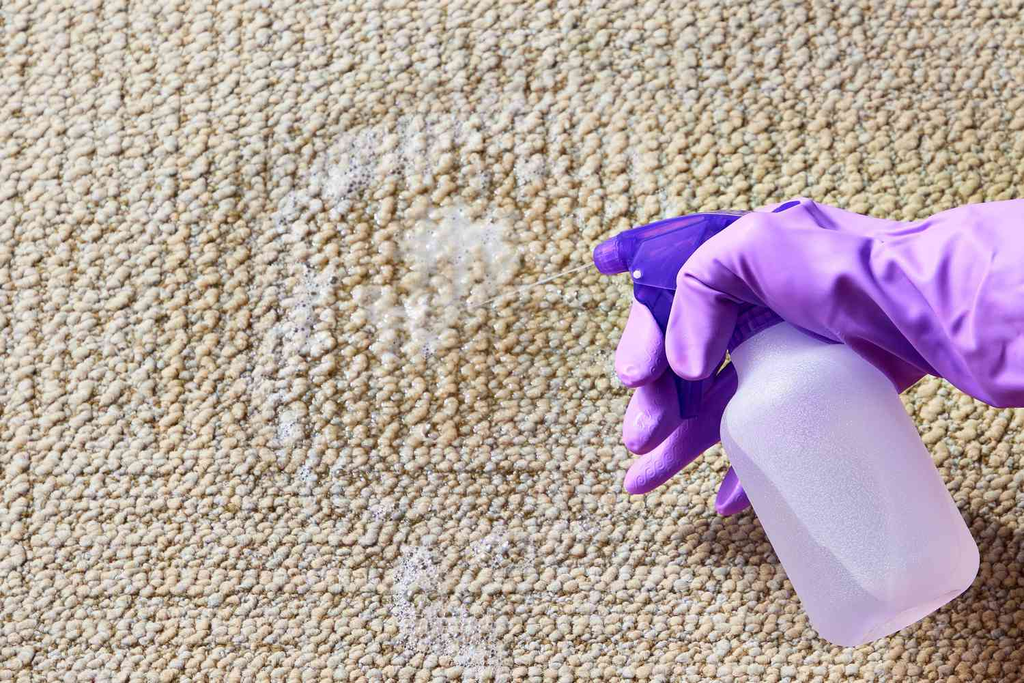
To apply, lightly mist the stained area until damp, working the solution gently between the fibers using a soft-bristled brush or clean gloved fingers. Cover the treated area with a damp towel to prevent fast evaporation, allowing the enzymes twelve to twenty-four hours to break down the pigment.
Safe Homemade Stain Removal for Synthetics
If commercial cleaners are unavailable, you can assemble a safe cleaning solution using standard pantry staples:
- Combine two cups of lukewarm water with one tablespoon of clear liquid dishwashing soap (free of added moisturizers, fragrances, or artificial colors).
- Add one tablespoon of distilled white vinegar to balance alkalinity and neutralize mineral salts.
- Lightly blot the mixture onto the stained fibers using a clean cloth, working from the outside edge inward to keep the perimeter from expanding.
- Blot thoroughly with a dry towel, then rinse with a small splash of cold water to clear away remaining soap surfactants.
Critical DIY Mistakes That Ruin Carpets
When homeowners try to address carpet issues quickly, they often turn to aggressive cleaning tactics. To keep your floors in top shape, avoid these common mistakes:
Applying High Heat
Never run a home steam cleaner with high-temperature water directly over an untreated pet stain. High thermal energy permanently bonds the animal proteins to synthetic carpet fibers, much like boiling an egg alters its proteins. Once this thermal bond occurs, clearing away the yellow stain becomes nearly impossible.
Using Household Chlorine Bleach
Never apply standard chlorine bleach to residential carpets unless the yarn is specifically manufactured as 100% solution-dyed commercial fiber. Chlorine bleach strips all dye from standard piece-dyed nylon, leaving behind a stark, permanent white or yellowish hole.
According to consumer fabric guidelines from the Institute of Inspection, Cleaning and Restoration Certification (IICRC), improper chemical selection and over-wetting are the leading causes of preventable carpet degradation, backing delamination, and secondary mold growth.
Protecting Subfloors, Padding, and Fiber Life
A major challenge with pet accidents is that what you see on the surface represents only a fraction of the total spill. Because fluids flow downward with gravity, a two-inch spot on top of the pile can spread into a six-inch pool inside the porous foam pad underneath.
If moisture sits in the cushion layer for extended periods, moisture can break down the primary latex backing holding the carpet yarns together. This backing failure leads to ripples, wrinkles, and loose edges that require professional stretching.
When an accident saturates the padding, use a dedicated wet/dry extraction vacuum to pull moisture from deep within the floor cushion. After cleaning, place an oscillating fan near the area to speed up air drying and prevent mold from developing along the baseboards.
Upgrading to Pet-Friendly Flooring Solutions
Even with careful cleaning habits, active homes with multiple pets face regular wear, tear, and accidental spills. When older flooring reaches the end of its useful lifespan or shows signs of permanent sub-surface wear, upgrading to modern pet-engineered surfaces provides long-term peace of mind.
Partnering with an experienced local specialist like Aggieland Carpet One ensures you find flooring built to handle active pet households. Modern residential options include built-in stain barriers that won’t wash away, waterproof backing barriers that stop liquids from reaching underlying cushions, and durable hard-surface alternatives like luxury vinyl plank and tile.
Consulting with specialists who understand quality residential carpet and flooring choices helps you select durable materials, arrange professional installation, and ensure your home stays comfortable, attractive, and easy to maintain.
Final Thoughts: Restoring Fresh, Beautiful Carpets
Maintaining clean, stain-free carpets in a home with pets requires patience, prompt attention, and the right approach to cleaning.
By understanding how to remove pet stains from carpet with careful blotting, bio-enzymatic spotters, and cool-water flushes, you can lift tough spots without damaging delicate pile fibers. Avoid harsh bleach, skip high-heat steam treatments, and take quick action whenever accidents occur. With the right care routine, your carpets will keep providing warmth, beauty, and comfort for years to come.